

Kayaking
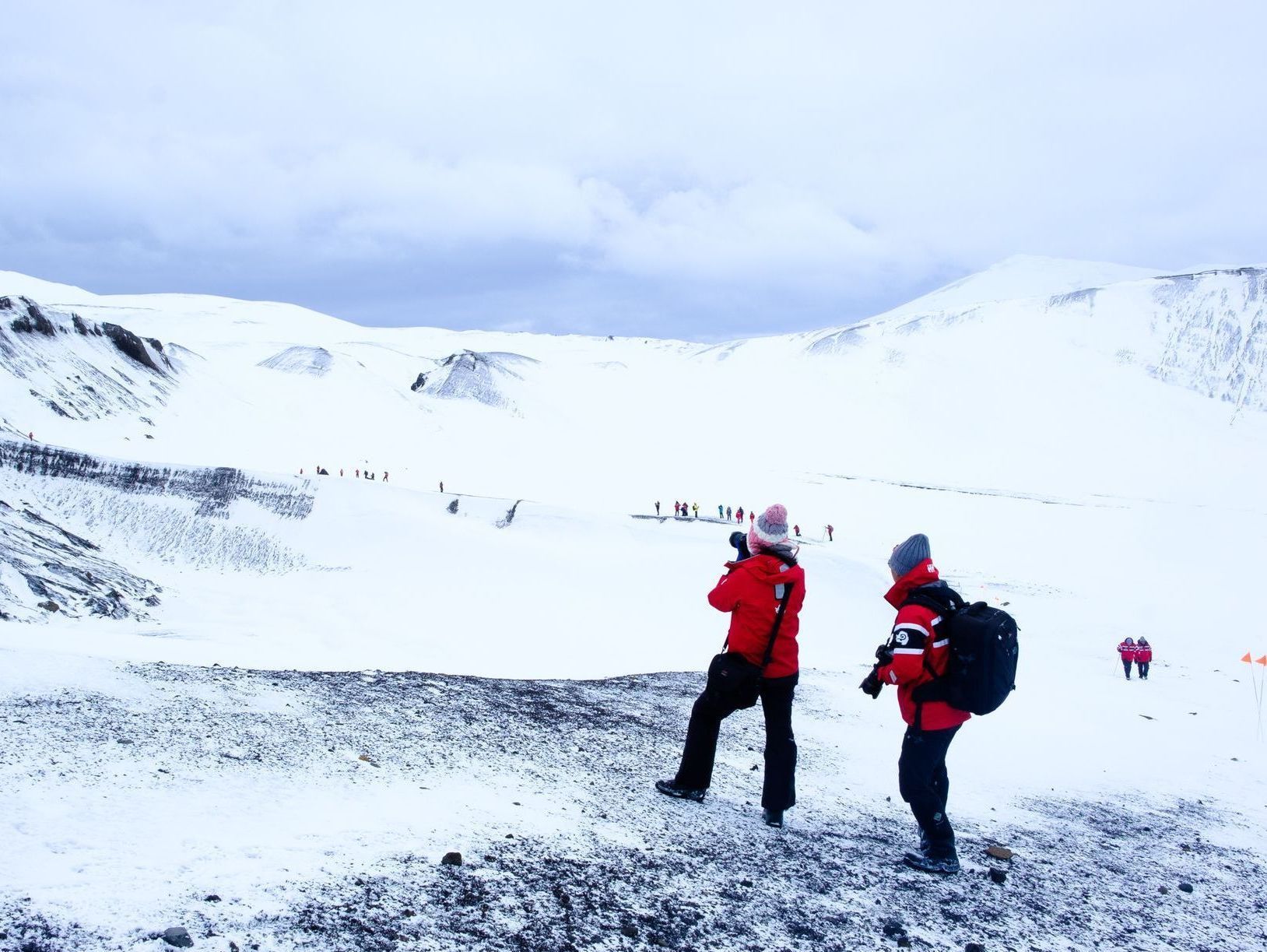
To experience Antarctica up close and personal, there’s really no better seat than the one in your kayak, just inches above the water, navigating among icebergs and glacial ice dating back 30,000 years.
Photography
On every voyage, a dedicated photography coach will be at your disposal with invaluable tips and advice on how to capture the natural beauty of this unique landscape and all that inhabit it
Unique Wildlife
Observe the comedic stylings of various penguin species, seals lounging on drifting ice, and the
ever-present possibility of encountering curious Orca or
Humpback whales.
Small Ship
Join our Polar Experts as they share their vast knowledge of Antarctica, from its enchanting wildlife to its bold history. Participate in our pioneering Citizen Science program or sit back and relax while glimpsing rarely seen wildlife.
Overview
Guyana is an untouched wilderness located between Venezuela, Brazil and Suriname. Relatively few travellers have visited this pristine and unspoilt destination with amazing bio-diversity of over 800 species of birds and hundreds of species of mammals and reptiles. Here you can see the Neo-tropical ‘big five’ – jaguar, giant river otter, giant anteater, black caiman and harpy eagle. From breath-taking waterfalls and spectacular wilderness scenery, to community tourism in indigenous villages, Guyana will provide a real adventure.
Day by Day Itinerary
Day 1 | Thursday
Pickup and transfer from Cheddi Jagan International Airport to Georgetown and your selected hotel.
Cara Lodge was built in the 1840s. It has a long and romantic history and was the home of the first Lord Mayor of Georgetown. Over the years, the property has been visited by many dignitaries including King Edward VIll who stayed at the house in 1923. Other dignitaries have included President Jimmy Carter, HRH King Charles III and Mick Jagger. This magnificent wooden colonial home turned hotel offers the tradition and nostalgia of a bygone era.
Overnight at Cara Lodge.
Day 2 | Friday
This morning, we make an early start to have breakfast at one of the local stands with our host, guide and culinary master, Chef Delven Adams who will guide us around Bourda Market, the largest of the four markets in Georgetown. We will start our tour at the Guyana Shop which has all the local products produced and packaged in Guyana, before heading over to the market where we will meet some of the vendors who Chef buys from daily.
We will visit the fish market, the meat section and the haberdashery section - where one can find anything you can think of from thread to bolts of all kinds of fabric. Dry goods like rice and of course demerara sugar are abundant. A stop at the bush medicine stalls is always educational. Heading outside you can see, touch and taste a variety of local fruits and vegetables unique in this part of the world. The chef will make his purchases with your suggestions of what you would like to try and will then head home to start preparing while we continue on a tour of the city of Georgetown with an experienced guide who will give you the history, rumour and facts on Georgetown and its citizens.
During your visit to Georgetown, there are a number of interesting sites that should not be missed such as the National Museum, which contains a broad selection of our animal life portrayed in taxidermy in beautiful old glass cases, and the Walter Roth Museum of Anthropology, which houses a wonderful collection of artefacts and explains history and lifestyle of our indigenous peoples.
On this mix of vehicle and walking tour, enjoy the views of other historic buildings along this promenade such as the Public Library, City Hall, the Victoria Law Courts, St. Andrews Kirk, Stabroek Market - once described as a “bizarre bazaar, and St. George’s Cathedral, which is one of the world’s tallest free-standing wooden buildings.
We will visit the Botanical Gardens, home to an extensive collection of tropical flora, and we will also pay a visit to a pond either in the gardens or the National Park, to feed the endangered West Indian Manatees.
After our city tour, we will go to the Backyard Café for lunch. This, as the name suggests, is a backyard that Chef has turned into an exclusive little hidden gem of a restaurant. If you are interested, Chef will welcome you to join him as he prepares a wonderful meal prepared from the fruits and vegetables we bought in the market in the morning. Or you can just sit under the arbour and sip unique blends of juice or enjoy a cold beer, while taking in the sounds and smells of a delicious meal in the making. Once he is ready, we will start eating our way through the courses, remember to pace yourself as you will want to try it all.
This afternoon we will take a drive through the heart of the city to the Stabroek Market area. Here we will join the afternoon commuters using the old ferry stelling to board the river taxis which are used to cross the Demerara River. The river taxis are a faster alternative route to using the Demerara Harbour Bridge.
We will slowly cruise along and across the Demerara River while your guide will give a brief history of the famous buildings along the waterfront. We then continue our trip to see the Demerara Harbour Bridge, once the longest floating bridge in the world at a total length of 1,851m long. We will cross under the bridge and tie up our boat near a mangrove that is the nightly roost for a variety of birds. As the sun sets over the river we will have a cold drink and some snacks (or cutters as we call them here in Guyana) as we enjoy flocks of brilliant Scarlet Ibis, Snail Kites, Herons, and three kinds of Egrets as they fly across the sky and settle into the mangroves for the evening.
Soon after the sun sets we return to the ferry stelling while enjoying the city and ship lights from the river.
Overnight at Cara Lodge.
Meals Included: Breakfast & Lunch
Day 3 | Saturday
0545hrs pickup and transfer to the extensive and beautiful Georgetown Botanical Gardens where, if we are lucky, we will have views of the Blood-coloured Woodpecker. This colourful Veniliornis is found only in the Guianas and even there almost wholly limited to the narrow coastal plain. The gardens host Snail Kite, Gray Hawk, Pearl Kite, Carib Grackle, Red-bellied and Red-shouldered Macaws and the rare festive parrots. We will walk on trails in the back of the gardens and may see Yellow-chinned Spinetail, Black-crested Antshrike, Silver-beaked Tanager, Buff-breasted Wren, Golden-spangled Piculet and Ashy-headed Greenlet. You may even want to take a break from birding to feed some manatees in one of the nearby ponds.
Return to your hotel.
Pickup and transfer to Eugene F. Correia International Airport.
From the Eugene F. Correia International Airport take a scheduled flight over the Demerara and Essequibo Rivers and hundreds of miles of unbroken tropical rainforest to land at Kaieteur Falls, the world’s highest free-falling waterfall.
Kaieteur which was first seen by a European on April 29, 1870 is situated in the heart of Guyana on the Potaro River, a tributary of the Essequibo. The water of Kaieteur flows over a sandstone conglomerate tableland into a deep gorge - a drop of 741 feet or 5 times the height of Niagara Falls.
There are no other falls in the world with the magnitude of the sheer drop existing at Kaieteur. Amerindian legend of the Patamona tribe has it that Kai, one of the tribe’s chiefs (after whom the falls is named), committed self-sacrifice by canoeing himself over the falls. It was believed this would encourage the Great Spirit Makonaima to save the tribe from being destroyed by the savage Caribishi.
Kaieteur supports a unique micro environment with Tank Bromeliads, the largest in the world, in which the tiny Golden frog spends its entire life and the rarely seen Guiana Cock- of-the-rock nesting close by. The lucky visitor may also see the famous flights of the Kaieteur Swifts or Makonaima Birds which nest under the vast shelf of rock carved over millions of years by the black water of the Potaro River.
Pickup and transfer from Eugene F. Correia International Airport to Georgetown.
Overnight at Cara Lodge.
Meals Included: Breakfast
Day 4 | Sunday
Pickup and transfer to Eugene F. Correia International Airport. Board scheduled flight for journey over hundreds of miles of tropical rainforest to land at Fair View Airstrip. (Check in time 0730hrs, Departure 0900hrs)
Pick up from Fair View airstrip and transfer along the trail that is one of the best places to see the elusive Jaguar. No promises, but many have been lucky! Along the road, we will watch for the myriad of bird species that frequent the forest edge. This road is the only north – south access in Guyana and links the country to Brazil. Even so traffic is only very occasional and wildlife is often seen along the road, such as Agouti, Tayra, Tapir and Black Curassow. The journey concludes at the Atta Rainforest Lodge, home of the Iwokrama Canopy Walkway.
The Iwokrama Canopy Walkway is situated near the southern boundary of the Iwokrama Reserve in central Guyana. The walkway has four suspension bridges leading to three platforms, the highest of which is over 30 metres above the ground.
Another area where we will want to spend some time is the clearing around the lodge, as this is one of the best places to see another of Guyana’s “must see” birds, the Crimson Fruitcrow. The clearing is also a reliable site for Black Curassow as there is a large and growing family party which has become habituated to people and regularly passes through the clearing.
Atta Rainforest Lodge is 500 metres from the base of the Iwokrama Canopy Walkway, offering comfortable private-room accommodation with ensuite bathrooms, delicious home-cooked meals, and traditional Amerindian hospitality. The communal building houses the bar, dining area and kitchen and is open sided with views across the gardens to the towering forest, which completely surrounds the lodge. Hammocks and outdoor benches enhance the lovely gardens which include varieties of heliconia's that attract over ten different hummingbirds, close enough for the perfect photo.
Overnight at Atta Rainforest Lodge.
Meals Included: Breakfast, Lunch & Dinner
Day 5 | Monday
Before dawn we will return to the canopy where we can birdwatch easily and may see Rufous-throated Sapphire, Green Aracari, Pygmy Antwren and Guianan Streaked-Antwren. With some luck Guianan Toucanet, Pompadour Cotinga, Buff-cheeked Greenlet and a host of crown specialists may come within our view. From this tree top vantage, you can sometimes see Red Howler and Black Spider Monkeys.
Apart from the Iwokrama Canopy Walkway itself you can enjoy wildlife and birdwatching walks on the trails around the area. Many bird species, stunning insects, noisy amphibians, and playful primates make the surrounding forest their home. Deer, Tapir and agouti are also regular visitors to the lodge. Serious birders will want to search the undergrowth for the rarely seen Rufous-winged Ground-cuckoo.
As darkness falls on the canopy walkway, you may see the White-winged Potoo. Night walks are also possible and something interesting or new always seems to pop on to the scene including one of the six different cats to be found along the transnational road near the lodge.
Overnight at Atta Rainforest Lodge.
Meals Included: Breakfast, Lunch & Dinner
Day 6 | Tuesday
Welcome the dawn chorus from the canopy walkway and then return to the lodge for breakfast before departure.
Transfer from Atta Rainforest Lodge through the rainforest to Corkwood in the Iwokrama Forest. Here there is a comparatively short trail to hopefully see the amazingly brilliant Guianan Cock-of-the-rock. This trail is through interesting and pristine rainforest and the guides can explain how the plants are used for medicine and other purposes. Continue to Kwatamang Landing enroute stop at Rock View Lodge for lunch.
Enjoy lunch at Rock View Lodge before continuing your journey.
Travel by boat along the Rupununi River with opportunities to see wild Giant River Otters and Black Caiman. You will pass locals fishing and bathing in the river until you reach the Rewa River and the Amerindian community of Rewa. Journey is approximately 50 miles by river and can be as short as 2 hours and as long as 4 hours depending on the water level.
Rewa Village is located where the Rewa River runs into the Rupununi River in the North Rupununi. The surrounding area is rainforest, mountains and oxbow lakes and teeming with wildlife birds and fish. The community of approximately 220 persons is predominately Macushi with a few families of the Wapashani and Patamona tribes. Villagers practice subsistence farming, fishing and hunting with little opportunity for cash employment.
In 2005 the community constructed the Rewa Eco-lodge so that they could establish a sustainable eco-tourism business. The lodge itself is situated on the river bank overlooking the Rewa River with views down river to the Rupununi River. Along the river bank tables and benches offer a relaxing location to enjoy the river. The grassed clearing in the rainforest houses three benabs and six cabins. The largest benab is the kitchen and dining area, with an outlook to the river. Accommodation is in two benabs each with two bedrooms and a large patio with hammocks for relaxing with shared bathrooms just outside; and six individual cabins with attached bathrooms open to the sky.
Once settled in take a walk over to the community of Rewa to see how the locals live. Visit villager’s houses where you can experience their everyday life and see activities such as grating cassava, weaving baskets and tending kitchen gardens.
Later this afternoon you have the option to go fishing for Peacock Bass and Piranha at a nearby pond, or wildlife spotting in the Oxbow Lake.
Take a short boat ride from the lodge to the opposite bank on the Rupununi River. Hidden after a five-minute walk from the boat is a lovely oxbow lake. The magical setting is enhanced with a wooden deck out over the pond, allowing close-up views of the Victoria Amazonica, the world's largest waterlily and the national flower of Guyana. The leaves that float on the water grow up to 3 metres in diameter with a submerged stalk of 7 to 8 metres. The flowers which bloom at dusk are white on the first night. By the third night, they change colour to pink and also change to a male flower. The golden colours across the pond at dusk combined with birds coming into roost provide a lovely nature experience.
Overnight at Rewa Eco-lodge.
Meals Included: Breakfast, Lunch & Dinner
Day 7 | Wednesday
Enjoy breakfast at dawn overlooking the river. Then head out by boat along the Rupununi River, into an oxbow lake to begin a hike up Awarmie Mountain. The climb is steep in a few sections but in general not too difficult. Along the way, you may see lots of birds and perhaps good close up views of Black Spider Monkeys.
There is good birding along the trail with White Bellbirds calling both from the scrubby woodland at the beginning of the trail and again from the forests far below you when reach the summit. Other species you may see include Ornate Hawk-eagle, Black Curassow, Red-fan Parrot, Guianan Puffbird, Todd’s Antwren, Spotted Tanager and Bay-headed Tanager. The area also has a high density of macaws including Scarlet, Blue-and-yellow and Red-and-Green Macaws.
There is a small plateau on the top of the mountain and in one direction, there are uninterrupted views back to the Rupununi River, some patches of Savannah and across to the distant Kanuku Mountains. In the other direction, there is a near vertical drop of at least 200m and the view is across great swathes of undisturbed forest to the distant Iwokrama Mountain and much closer, Makarapan Mountain. Makarapan is the oldest mountain in South America if not the world clocking in at an amazing two thousand million years old.
Lunch at the bottom of the mountain. After lunch return to the lodge.
This afternoon you have the option to go fishing for Peacock Bass and Piranha, or wildlife spotting in the Grass Pond.
Take a boat up the Rewa River and then a 15-minute hike to Grass Pond. This pond or lake is about 3kms long and is a beautiful setting with Victoria amazonica. It has a good population of Arapaima, (reportedly the highest density in Guyana) the largest scaled freshwater fish in the world and you can also fish for Peacock Bass.
During a late afternoon visit, you may see Brown Capuchin monkey or Capybara. Birds likely to be seen include Limpkin, Wattled Jacana, Black-collared Hawk, Green Kingfisher and Guianan Puffbird. As dusk settles, watch the flower of the Victoria amazonica bloom.
We continue up river and then hike through the rainforest to area where we can observe the Goliath bird-eating spider, the largest spider in the world by mass and size. The practice of calling theraphosids "bird-eating" derives from an early 18th-century copper engraving showing one eating a hummingbird.
These spiders can have a leg span of up to 28cm (11in), a body length of up to 11.9cm (4.7in) and can weigh up to 175g (6.2oz). Despite its name, it is rare for the Goliath bird-eating spider to actually prey on birds; in the wild, its diet consists primarily of other large arthropods, worms and amphibians. However, because of its size and opportunistic predatory behaviour, it is not uncommon for this species to kill and consume a variety of insects and small terrestrial vertebrates. In the wild, they have been observed feeding on rodents, frogs, toads, lizards and even snakes.
Overnight at Rewa Eco-lodge.
Meals Included: Breakfast, Lunch & Dinner
Day 8 | Thursday
After breakfast say goodbye to staff and newfound friends and board boat for travel along the Rupununi River to Kwatamang Landing.
Transfer from Kwatamang Landing to Aranaputa Peanut Butter Factory then to Pakaraima Mountain Inn for lunch. Continue to Ginep Landing after lunch.
Visit the village of Aranaputa and their community operated Peanut Butter Factory. The area is suited to peanut growing, but a long way to the markets of Georgetown, and so this cottage industry provides local farmers with a viable market for their produce. Operated by a co-operative of local ladies they manufacture organic peanut butter which along with cassava bread is supplied to local schools.
Continue on to the Pakaraima Mountain Inn, which sits in the Aranaputa Valley, just outside the village of Yakarinta. Enjoy a home-cooked lunch on the veranda along with fascinating stories from local character and host, Charlie De Freitas.
From Ginep Landing we take a boat trip on the Rupununi River to Karanambu Lodge. Depending on the river level, this trip offers an excellent opportunity to look for Giant Otters as there are several family groups which live along this stretch of the Rupununi River.
Karanambu, a 110-square mile former cattle ranch located in the North Rupununi, was the home of the late Diane McTurk, conservationist and a world-renowned expert on giant otters. Known for its expansive wetlands and savannah, as well as its biological and cultural diversity, Karanambu encompasses savannah, marshy ponds, riparian forest, and a 30-mile stretch of the Rupununi River. The number of species found here is much higher than expected given its size with at least 600 species of bird, and over 200 species of mammals. The seasonally flooded savannahs and forests also draw substantial fish migrations with as many as 700 species of fish — more than anywhere on Earth.
This region is rich in history and is the homeland of the Makushi and earlier peoples dating back more than 7,000 years. Several prominent explorers and naturalists have written about their experiences here, including Robert and Richard Schomburgk, Charles Waterton, Evelyn Waugh, and Gerald Durrell. A very young David Attenborough spent time here and wrote about it in his early book, “Zoo Quest to Guiana”.
With both the river and savannahs close at hand there is a wide variety of activities to be enjoyed at Karanambu. Two guided excursions are provided each day — one early in the morning and another late in the afternoon and into the evening. As well as being the coolest times to be out, these are usually the best times to see the different birds and animals. Trips may be on the river by boat, on the savannahs by 4 by 4 or along forest trails on foot to the different ponds in the area.
Late in the afternoon we will travel by boat to look for wild Giant River Otters and as dusk falls to the ponds to see the giant Victoria amazonica waterlily, bloom at dusk. On the return trip we will spotlight for Black Caiman and birds and creatures of the night.
Accommodations are in traditionally made clay brick cabins, each with en suite and veranda with hammocks.
Overnight at Karanambu Lodge.
Meals Included: Breakfast, Lunch & Dinner
Day 9 | Friday
This morning we make an early start to an area of rolling grasslands, home to a population of giant anteaters. With luck we shall locate one of these six-foot long animals excavating its breakfast from one of the termite mounds that stud the savannah. Though giant anteaters live in overlapping home ranges they are mostly solitary except during mother-offspring relationships, aggressive interactions between males, and when mating. Mother anteaters carry their offspring on their backs until weaning them.
Evening river excursion or if you are interested in bird watching you can explore woodland patches or gallery forest along the river where we’ll hope to find a variety of species. A feature bird for the area is the Agami Heron. An evening walk along the airstrip offers seven species of nightjar and among the grasslands the Double-striped Thick-knees.
Overnight at Karanambu Lodge.
Meals Included: Breakfast, Lunch & Dinner
Day 10 | Saturday
In the event you did not see a giant anteater the previous morning, there is time to travel out to search the savannah again. Or explore the Rupununi River in search of wild Giant River Otters, Black Caiman and Arapaima, making a boat journey along quiet stretches of river.
Return to the lodge for breakfast before departure. After breakfast we say our goodbyes and transfer upriver by motorized boat to the nearby Amerindian village of Yupukari and Caiman House.
At the edge of Yupukari Village in the Central Rupununi is Caiman House Field Station, a combination guest-lodge and education centre focused on research and conservation projects along the nearby Rupununi River. The Field Station is the hub of several participatory development projects, including the introduction of classroom libraries in all three village schools and an Internet-enabled public library. Visitors may have the opportunity to meet local craftspeople, including the furniture builders at Yupukari Crafters, The Wabbini craft house, and the ladies that grow and process cotton and make lampshades.
Caiman house is also very involved in a turtle conservation program. Recently in the rainy season the sand banks get covered in water as the rains have been coming earlier. Rangers go out and dig up the eggs that the turtles have laid on the sandbanks before they are covered in water and spoiled. They are taken back to the field station and reburied. When they hatch they are kept in two ponds and after a few months there is the turtle celebration and the children in the wildlife club all join in to release the turtles back into the river. By holding them for up to a year the shells harden and the survival rate is very much higher resulting in a larger population of turtles. The yellow spotted river turtles are the main beneficiaries of this program but it is the rare giant river turtle which stands to gain the most. Special attention is paid to rescuing these endangered giants. You can visit the holding ponds where the babies are kept.
Four modest but comfortable guest rooms are situated around a central lounge area in the lodge behind the research centre. Guest rooms feature comfortable beds and ensuite bathrooms with flush toilets and running water. Other rooms are available in the annex building, two with ensuite and one with a shared bathroom. Caiman House Field Station and the Guest House are powered 24 hours a day by a large solar array. The entire station is served by wireless internet access.
As a guest you have the unique opportunity to support and participate in an ongoing field study of the Black Caiman (Melanosuchus niger), the largest member of the alligator family and an endangered species. You are invited to accompany the indigenous crew as they search for and capture Black Caiman on the river. Guests will observe the capture from a separate boat, but will be offered the opportunity to assist in data collection. Caiman are weighed, measured, sexed and tagged before being released back into the river. The research has already discovered interesting information on caimans’ nests that was previously unknown.
Overnight at Caiman House.
Meals Included: Breakfast, Lunch & Dinner
Day 11 | Sunday
Guests will be escorted with skilled guides who will go paddling or with an electric motor on the Awariku Lake for bird and wildlife spotting. Egrets and ibises are regular sightings and there is also the possibility of seeing Giant River Otters and Black Caiman. Paddle through a creek in some lowland forest and come out into the Rupununi River. Once on the river, you will drift down to the main landing and then return to Caiman House. In low water you will paddle back to the landing where you embarked.
Vehicle transfer from Caiman House to Lethem.
On arrival in Lethem you will be met and greeted by Leroy Ignacio. Leroy is the President of the South Rupununi Conservation Society (SRCS) and will guide you throughout your visit.
A scenic one-hour drive south takes you to Saurab Bridge. Saurab is a small community built around Saurab Creek and the forest that connects it to the Kanuku Mountains. Enjoy a delicious local lunch in the forest, prepared with ingredients from Quiko Village farm.
Meet Morris Adolf: local character, skilled artist and charismatic teacher. He will show you how he protects the forest from fire and overharvesting. As part of SRCS’s Traditional Skills programme, Morris gives weekly weaving classes to adults and children. Depending on the class timetable, you will be able to have a private lesson with him, or join him in the village with his craft group.
From Saurab, it is only approximately 90 minutes through beautiful scenery to Wichabai Ranch.
Make yourself at home at Wichabai, headquarters of the South Rupununi Conservation Society, family cattle ranch, and small ecotourism lodge. Everyone at Wichabai is part of the SRCS, and tonight there will be dinner and drinks with the family and a short evening presentation about the SRCS.
Overnight at Wichabai Ranch.
Meals Included: Breakfast, Lunch & Dinner
Day 12 | Monday
This morning you will join the SRCS in Giant Anteater research and conservation activities in the Katoonarib Giant Anteater Community Conservation Zone. An early start will find you scouring the savannah for tracks and signs of these fantastic animals. Your guide is the IUCN Anteater, Sloth and Armadillo Species Survival Commission Representative in Guyana. All observations are recorded as part of ongoing giant anteater monitoring, and photographs are used to identify individual anteaters.
After a lazy breakfast we will visit a nearby bush island. Since Wichabai is located in the centre of the South Rupununi Savannahs, the bush islands are vital for the local human and wildlife population. These understudied forest enclaves provide food, water and refuge for animals but at the same time are used by local people for farming, subsistence hunting and materials for building, medicines and craft. As communities grow, the challenge of maintaining these bush islands becomes ever more pressing. Wichabai monitors this bush island for wildlife using camera traps and also checks for signs of hunting and logging. Data is passed on to local community leaders who are trying to protect the islands for the future.
You will help the ranch to check the camera traps, log the wildlife and identify the individual jaguars, ocelots and anteaters. You will also be shown some of the ways in which local people use the forest plants for everyday life.
After lunch and a siesta you will be ready to meet the capybaras. Wichabai is the first capybara ranching enterprise in Guyana. The capybaras are free to roam in an 8Ha habitat next to the main house. This is a new venture, and the capybaras are still young. Soon they will be breeding and as the herd grows, families will be released to restock to local population or given to local farmers to ranch with their domestic animals. This operation is in response to declining capybara numbers as animals are caught for the Georgetown wildmeat market.
In the late afternoon you will walk into the hills behind the ranch for beautiful views and evening drinks. You will learn about the landscape of the Rupununi and its geological history. Less active guests can be driven most of the way, while some of you might like the challenge of a steep but short evening climb.
Overnight at Wichabai Ranch.
Meals Included: Breakfast, Lunch & Dinner
Day 13 | Tuesday
The adventure continues this morning with a drive to Sand Creek village. Here you will join SRCS rangers to find and record Red Siskins. Until the actions of the SRCS, these beautiful little birds were critically endangered, nearly wiped out for their vibrant feathers, singing voice and (bizarrely) their genetic traits. For the past 20 years, SRCS rangers have worked tirelessly to protect the species. For this work, which has seen the siskins relisted as ‘endangered’, President Leroy was awarded a 2024 Whitely Award for Conservation. Today, Red Siskins are protected by thousands of hectares of community conservation zones, village rules and monitored by SRCS rangers.
As well as protecting the siskins, Sand Creek’s SRCS rangers run an amazing Yelllow-spotted River Turtle Conservation Programme. From February to April, rangers patrol the beaches and protect the nests from predators, poachers and (more significantly) drought and flood. You will learn about this from the village rangers, and at certain times of year you can visit the turtle hatchery to feed the turtles or watch them hatching.
Back at Wichabai you will relax with an evening canoe drift on the Rupununi river. Enjoy the sights and sounds of the gallery forest at dusk, and watch the stars come out as you sip a favourite drink.
Overnight at Wichabai Ranch.
Meals Included: Breakfast, Lunch & Dinner
Day 14 | Wednesday
This morning you will join a senior SRCS ranger to walk a savannah-forest transect. Bird species, animal tracks and signs of human disturbance are all recorded. You will particularly be looking for the heavily traded birds: chestnut-bellied seed finch, chestnut-bellied seedeater and toco toucan. As well as supporting community management plans, the data from these transects is used by the SRCS in its programme to combat the consequences of the song bird trade in this region.
Leroy will take you back to Lethem to continue your journey.
Scheduled flight to Eugene F. Correia International Airport. Pickup and transfer from Eugene F. Correia International Airport to Georgetown.
Pickup at your hotel and transfer to a local restaurant.
Guyana has a plethora of incredible foods. From grass-fed cows, delicious fresh fish, succulent prawns, wonderful tasting chicken and the colourful fresh fruits and vegetables.
Now combine all that with a trained international Guyanese chef bringing together an updated form of classical Guyanese cuisine and served in the delightful garden setting of his home. On top of that, combined with the smells of the herb garden and seeing fruits of the garden hanging from the trees around you. Lit by stars moon and candlelight you are going to be in for an unforgettable feast.
Eon John will be cooking right in front of you so it’s a very personal experience.
We start with a delicious rum cocktail (or mocktail) and relax. The menu is designed to suit your group's palette so if you fancy the bush fish like hassar lovingly crafted into a delicious meal or maybe the golden Gilbaca catfish which is one of the sweetest fish ever. The ingredients come together using ingredients that have been personally sourced to give you a highlight of your dining experience in Guyana. Chef Eon John the Singing Chef will serenade you under the stars as you finish your meal.
Overnight at Cara Lodge.
Meals Included: Breakfast & Dinner
Why we love it

Wildlife Encounters

Activities

Stunning Scenery
Bucket List Trip
Gallery
All images courtesy of ©
